

It may seem like early March is a little soon to start discussing the forthcoming silage season, with many yet to start any slurry applications.
The Davidsons Dairy Tech team would argue that it is in fact the perfect time, not least because it will be here sooner than we think.
Making decisions now can have many benefits. We can ensure we have the plans in place to make plentiful, high quality forage. For example, speaking with our contractor is very important, especially if we are increasing the number of cuts being made compared with previous years and also to plan slurry and fertiliser applications.
However, one of the main considerations, especially when milk prices are under pressure, is how can we target improvements in silage quality in 2026 to help improve margins, emphasising more milk from forage.
It is possible, with the correct planning, timing and execution, to see increases of over 1000 litres/cow/year from forage with improved grass silage from one year to the next. A little luck on our side from the weather is always welcome, but with more focus on the overall process this improvement is possible.
How do we plan ahead to achieve these increases in milk yield from forage next winter?
The best place to start is with analysing slurry to make sure you have the important information on it’s nitrogen and macro mineral content, to fine tune application rates of both slurry and fertiliser.
This will allow you to get started as soon as the grass is at the optimum quality, the weather is favourable and soil temperatures are correct.
Pre-cut grass testing
Dairy Tech are available to test fresh grass to help determine the best time to cut grass for optimum quality silage – you cannot manage what you do not measure!
Start pre-cut testing at least 2-3 weeks before you took your first cut the previous year, and carry this out every 7-10 days until it is ready.
When assessing pre-cut results, pay close attention to the NDF level which is a good indicator of plant maturity, and nitrate content which indicates the buffering capacity of the crop. NDF levels can change quickly, and there is also a wide variation year-on-year, which is mainly due to varying weather and growing conditions in the lead up to the season. Aim for an NDF level of between 38- 42% at the point of cutting.
The level of nitrate should be as low as possible to facilitate a rapid pH drop resulting in an efficient fermentation.
This is because nitrate has an ion load which neutralises the acid (buffering), slowing the pH drop and the fermentation. First cut grass should contain less than 1000mg/kg of nitrate per kg fresh weight, also described as 0.1%.
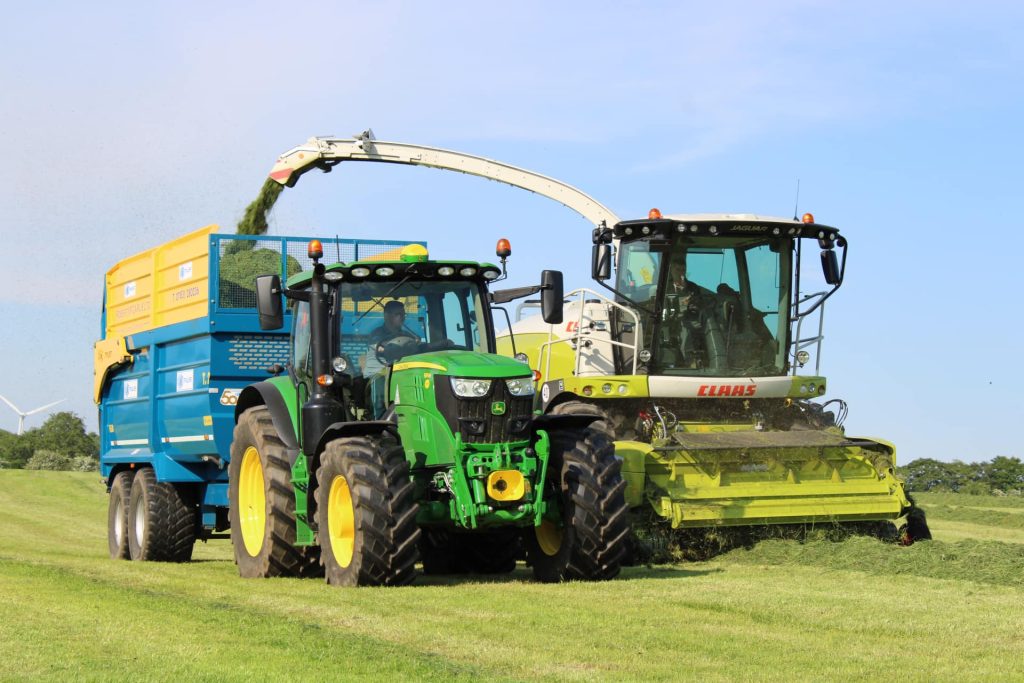
Paying attention to how the plant is visibly maturing during this time will also tell us a lot in terms of the quality of silage we are likely to make. As the plant matures, temperatures improve, daylight
length increases, the rate at which the plant speeds towards seeding increases. As it does so, NDF levels can rapidly increase. Once we are past the optimum cutting stage, NDF digestibility and
energy levels of the crop decrease significantly on a daily basis – something we are looking to avoid.
If you are looking to optimise your silage quality this summer, we would recommend spending some time now to think about your silage making plans and procedures. What has worked well in
the past? What could be improved on? How the Davidsons Dairy Tech team could help you achieve your goals?
Recent Comments